
The Big Question
You’ve been working hard to save up an extra thousand dollars. Now comes the big question: What should you do with it?
If you’re like most people, you’ve been told that if you have a mortgage, you should get it paid off as quickly as possible. Take that extra money, send it to the bank, and say:
“Hey, lower my mortgage because someday I would love to have my house paid off.”
But in today’s world, is that really the most important goal? Should you be striving to pay off your mortgage, or is there something different you should be doing with your money?
In this guide, we’ll explore:
- The traditional advice on paying off debt
- Why that advice might be outdated
- An alternative approach using arbitrage
- How to use your home equity to build wealth
- The difference between financial safety and financial freedom
The Traditional View: Dave Ramsey’s Philosophy

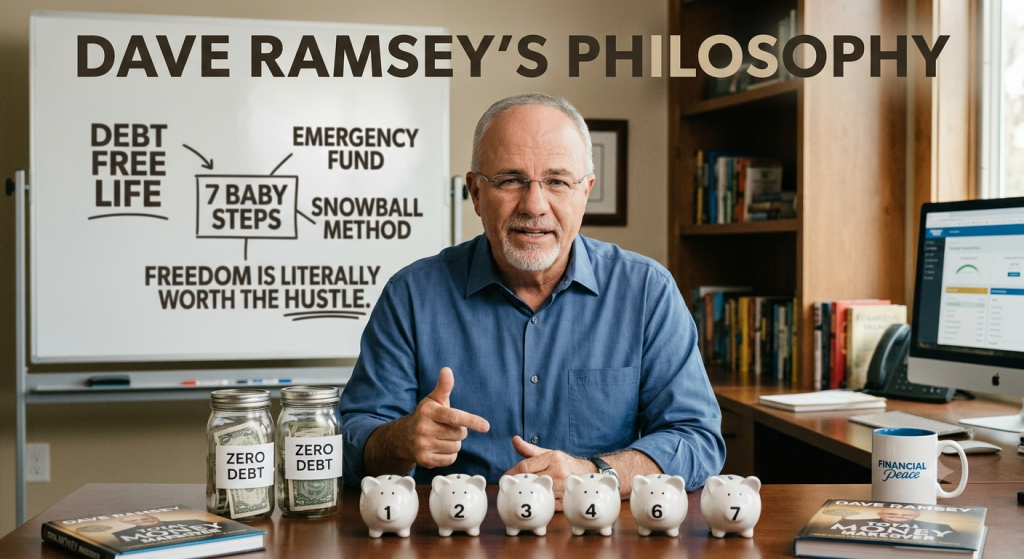
If there’s a mascot for the “get out of debt” movement, it’s Dave Ramsey. His advice includes:
| Rule | Recommendation |
|---|---|
| 1 | Don’t buy a house unless you’re out of debt |
| 2 | Get a 15-year mortgage (not 30 or 40 years) |
| 3 | Put as much down as possible (ideally 100%) |
| 4 | Monthly payment should be no more than 25% of take-home pay |
Ramsey’s message is clear: debt is the worst thing that could ever happen to you.
Who Is This Advice For?
Dave Ramsey’s advice works well for:
- People who are bad with money
- Those who are truly financially conservative
- Individuals who are scared of debt
For these people, eliminating debt provides peace of mind and safety.
A Different Perspective: Debt as a Tool
Here’s something I’ve learned over the years: debt can be used as a tool for generating and creating wealth.
Rich people play the money game to win. Poor people play the money game to not lose.
If you gear your entire life toward getting out of debt, it will consume your most valuable asset — time — in the pursuit of having no debt.
The Problem with the Traditional Approach
When you focus solely on paying off your house:
- You tie up all your extra cash in your home
- You lose the opportunity to invest that money elsewhere
- You’re still working a 9-to-5 job while your money sits idle
- You’re missing out on potential returns
What Is Arbitrage?
Arbitrage is the key concept that changes everything.
In simple terms: you borrow money at a lower rate and invest it at a higher rate.
Example:
| Action | Rate |
|---|---|
| Borrow money from the bank | 3% |
| Invest it in real estate | 25% ROI |
| Your profit (the spread) | 22% |
This is exactly what banks do. They take your money, pay you a tiny interest rate (0.1% on savings), and lend it out at 3-4% on mortgages. They profit from the spread.
Why This Matters
If you can borrow at 3% and earn 25%, you keep the 22% difference. That’s how wealth is built.
And here’s the best part: if you don’t use the money, you don’t pay anything at all.
How to Use Your Home Equity
Most homeowners don’t realize they’re sitting on a valuable asset. Let’s break this down.
Example Scenario
| Item | Amount |
|---|---|
| Home value | $400,000 |
| What you owe | $200,000 |
| Your equity | $200,000 |
Instead of trying to pay off that $200,000, you could:
- Open a Home Equity Line of Credit (HELOC)
- Banks typically allow up to 80% of your home’s value
- 80% of $400,000 = $320,000 maximum
- Minus what you owe ($200,000) = $120,000 available
You now have a $120,000 credit line at a low interest rate.
The Smart Move
Take $50,000 from that HELOC and use it as a down payment on an investment property.
| Item | Amount |
|---|---|
| HELOC interest rate | 3% |
| Investment property ROI | 25% |
| Monthly cash flow from rental | $450/month |
| Your profit (arbitrage) | 22% |
Now that $450/month is:
- Positive cash flow in your pocket
- Tax-free (written off against depreciation)
- Building equity in another property
- Growing your wealth portfolio
Safety vs. Freedom: Understanding the Difference
Scenario 1: The Safety Game (Pay Off Debt)
| Item | Amount |
|---|---|
| Monthly expenses | $4,000 |
| Monthly debt payments | $2,500 |
| Remaining expenses | $1,500 |
Result: You still need a job to cover $1,500/month in expenses. You’re safe, but you’re not free.
Scenario 2: The Freedom Game (Invest Using Debt)
| Item | Amount |
|---|---|
| Monthly expenses | $4,000 |
| Monthly passive income | $10,000 |
| Money left over | $6,000 |
Result: You can quit your job. You have your time back. You have money left over to reinvest.
Good Debt vs. Bad Debt
Not all debt is created equal.
Bad Debt (Consumer Debt)
| Type | Description |
|---|---|
| Credit cards | High interest, no asset behind it |
| Car loans | Depreciating asset |
| Personal loans | No investment return |
| Payday loans | Predatory rates |
Bad debt costs you money. It should be eliminated over time.
Good Debt (Investment Debt)
| Type | Description |
|---|---|
| Real estate mortgages | Asset that appreciates |
| Business loans | Funds that generate income |
| HELOCs for investing | Low-cost capital for wealth building |
Good debt makes you money. It’s an investment in your financial future.
When Should You Actually Pay Off Your House?
Here’s the sequence I recommend:
- Build a solid financial foundation (emergency fund, no high-interest debt)
- Learn to use arbitrage (borrow cheap, invest for higher returns)
- Build passive income streams (rental properties, businesses, etc.)
- Replace your job income with passive income
- Then pay off your debts (if you still want to)
💡 Key Insight: Don’t trade safety for freedom. Financial freedom is what we’re all really after.
The Reality: Most People Get This Wrong
When I talk to people in their 50s, 60s, and 70s, many have their houses half or fully paid off. But because they didn’t build residual income, they still can’t cover their expenses.
What happens next?
- They have to take out a reverse mortgage
- They have to sell their house
- Their “safe” asset evaporates
The very thing they thought would make them safe actually becomes a trap.
A Smarter Approach
Instead of obsessing over paying off your mortgage:
- Access your equity through a HELOC
- Invest that money in income-producing assets
- Let the returns cover the HELOC payment and then some
- Build multiple income streams so you don’t rely on a job
- Pay off debts later when you have passive income to do it
Summary: Which Path Will You Choose?
| Traditional Path | Wealth-Building Path |
|---|---|
| Pay off house as fast as possible | Use equity to buy more assets |
| Focus on eliminating debt | Focus on building income |
| Still need a job to cover expenses | Passive income covers everything |
| Safe but not free | Both safe AND free |
| Takes decades | Can happen in years |
Final Thoughts
The question isn’t really “Should I pay off my house?”
The real question is: What do you want your life to look like?
- Do you want to spend decades paying off a mortgage while working a job you don’t love?
- Or do you want to use your home’s equity to build passive income and buy your freedom?
Debt is not inherently bad. Consumer debt is bad. Investment debt can be good.
The key is learning how to use debt responsibly, understanding arbitrage, and building assets that produce income for you — so you don’t have to trade your time for money.
Are you ready to think differently about debt and wealth building? Let me know in the comments below!
Disclaimer: This article is for educational purposes only and does not constitute financial, investment, or legal advice. Always conduct your own research and consult with qualified professionals before making financial decisions. Past performance does not guarantee future results. Individual results may vary.